
Abinger: The Family Building a Watch Brand Together
The UK-based co-founders of the family-owned brand discusses the origins of the brand, and expands their offerings with their latest release, the Phantom.
By Chris Antzoulis (in conversation with Tom Howison Hill, Zoe Howison Hill, and Holly Abinger)
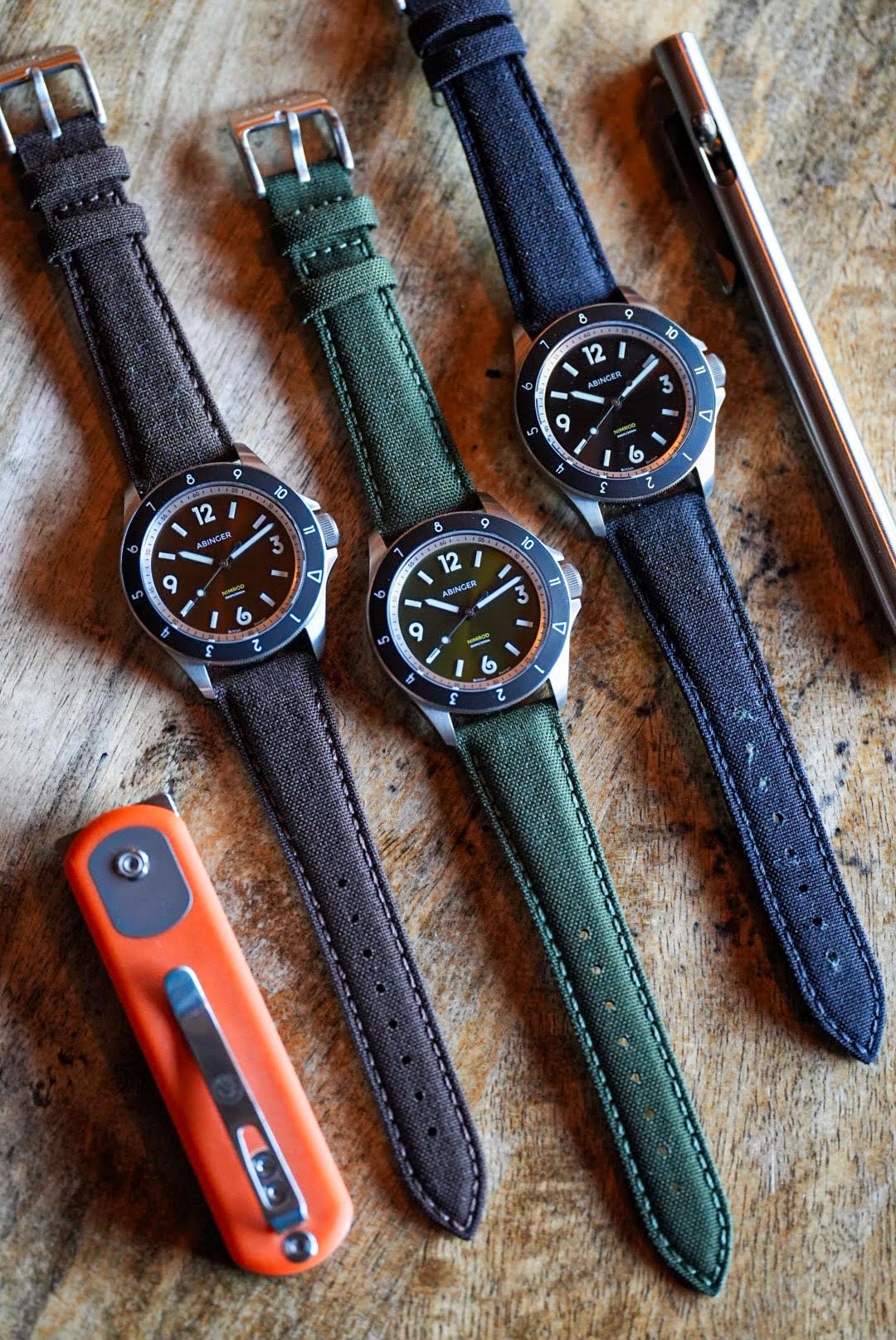
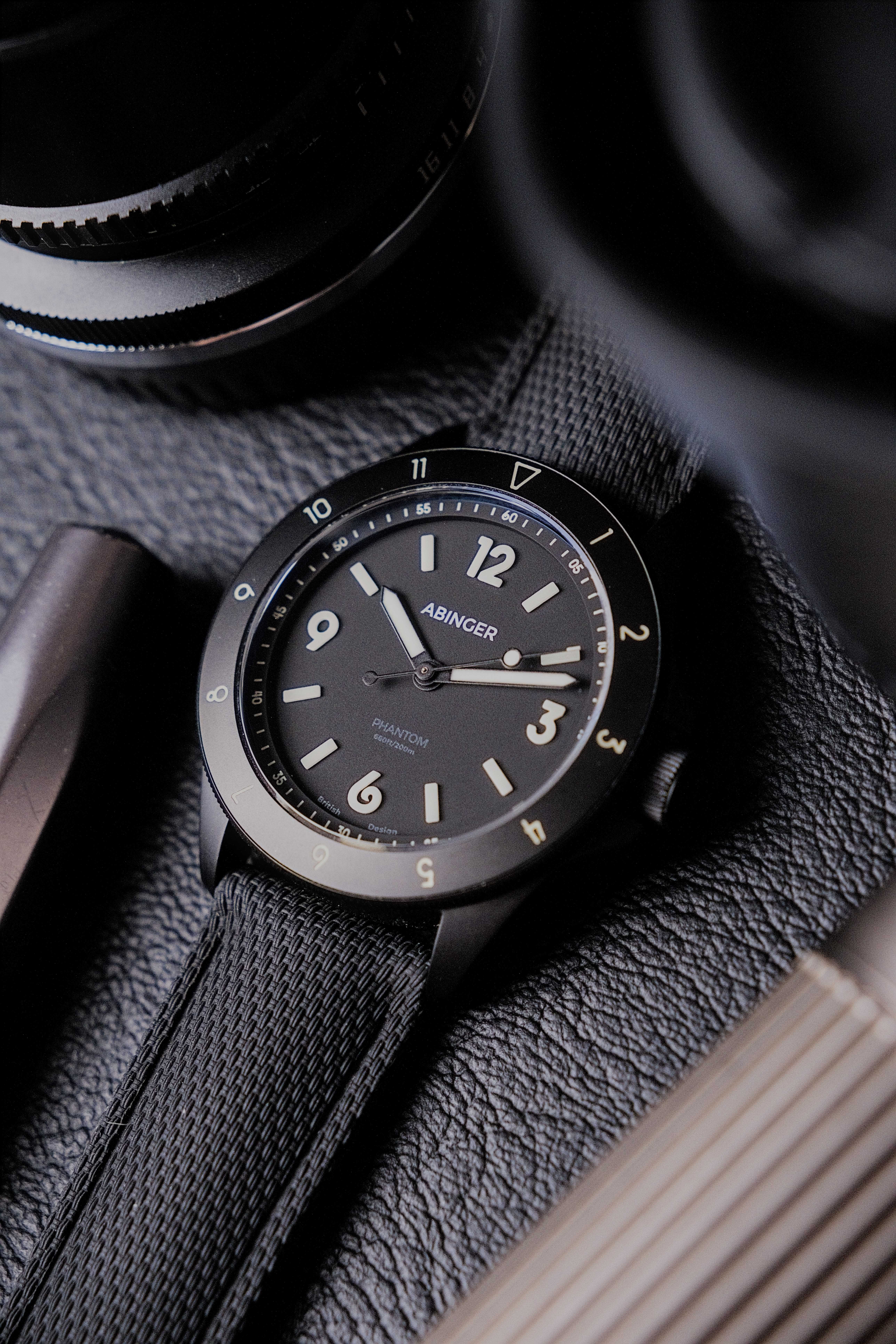
Last year I had the pleasure of spending some time with what I’ve said, on more than one occasion, is one of the best watches I’ve ever handled at under one thousand dollars, the Abinger Nimrod. Now the Abinger team is pushing the boundaries of where the Nimrod platform can go with their release of the PHANTOM. With their new blacked-out DLC cases, the two new watches are stealthy yet distinct from one another. The Luna has a fully luminous C3 dial, with skeletonized, blacked-out hands, and fully darkened indices. The Nox variant leans fully into stealth mode with a matte-black dial and C3 luminous hands and lume-block indices.
With their second release inbound, I thought the watch enthusiast community deserved to meet the family that runs Abinger to better understand how this brand operates and how they’ve been able to deliver some seriously special watches in such a short time.
Most new watch brands arrive with an over-the-top claim that serves as a pitch to prospective consumers. Abinger arrives with a story, but, in my opinion, it’s not the one they’ve been telling; it’s the one they embody.
The product at the center of it all is the Nimrod, a debut that has been celebrated elsewhere as a bit of a slam dunk. I was one of those people shouting about it on an episode of my A Tale of Two Wristies podcast. A three-hand adventure watch with a GMT bezel, built with the “one watch” ambition in mind. It’s a tool, but refined enough with its beautiful dial layout, font, and color options that it can easily dress up.
But this isn’t a review of the Nimrod or the Phantom.
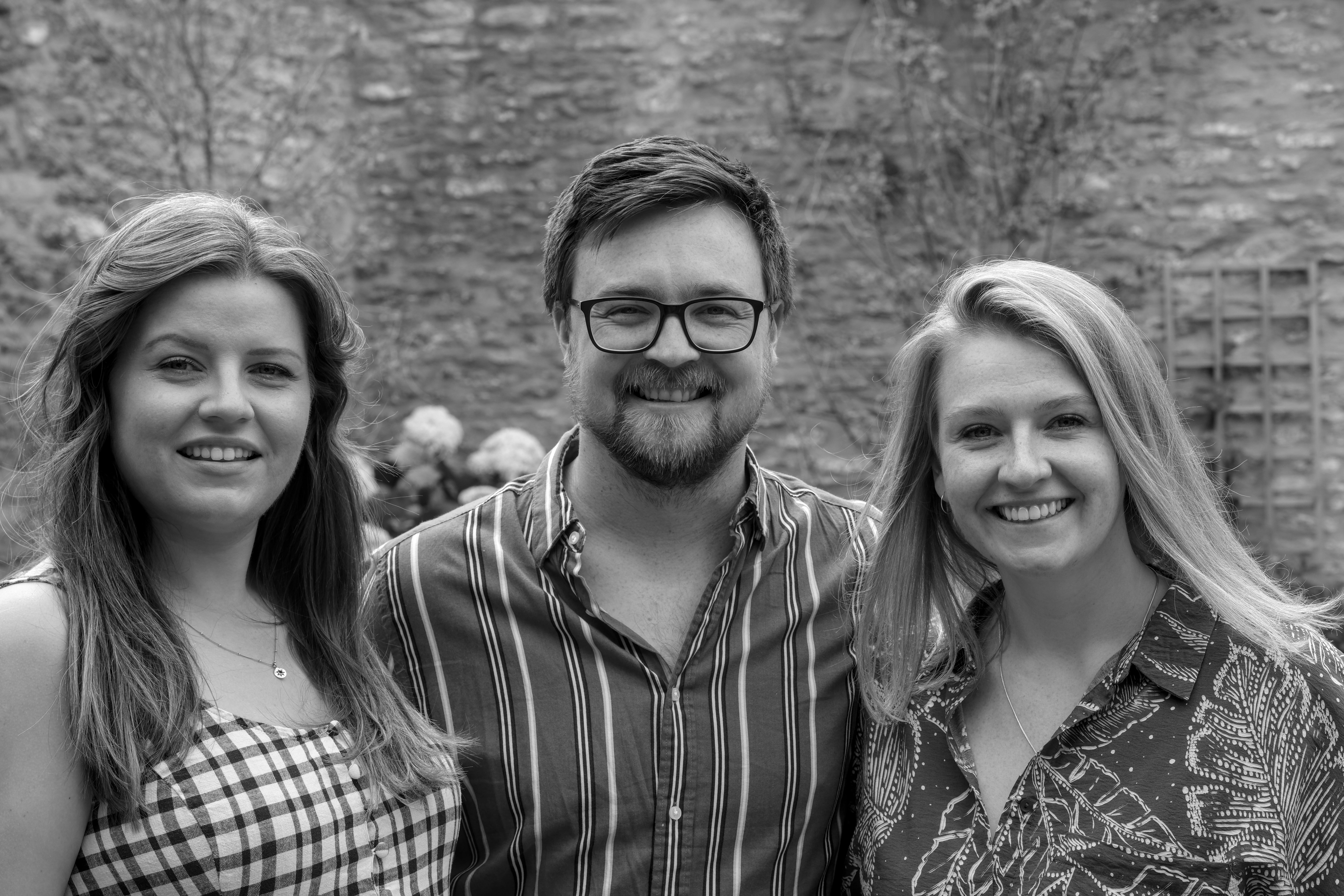
The more time I spent with the people behind Abinger (Tom Howison Hill, his wife Zoe Howison Hill, and Zoe’s sister, Holly Abinger), the clearer it became that the watch, strong as it is, is just part of a bigger story. The more compelling narrative lies with the people who brought it to life and in the way they’ve chosen to do it together.
Abinger is not a brand name pulled from Tom’s mood board, though he strikes me as a guy who has one. It’s a family name - Zoe and Holly’s father’s name, to be exact. A name that carries weight, memory, and with that, an added responsibility. It was he who, upon his passing, gave a watch as a bequest to Tom, who would later become his son-in-law. The watch was Tom’s first serious watch, a Montblanc that would set off a chain reaction familiar to many watch collectors. Curiosity turned into enthusiasm, enthusiasm into obsession, and obsession that became the genesis of a brand.
Sketches became concepts. (There were hundreds. I’ve seen them.) Concepts became designs. And along the way, one of those designs became good enough to take the leap.
What makes Abinger distinct is that Tom didn’t take that leap alone.
Zoe and Holly didn’t just lend their blessing to using their father’s name; they stepped into the business as co-founders, each carving out their own role within the company. What has emerged is something cohesive: a family-run watch brand with oodles of personal history and a newfound professional ambition.
This piece is built from three conversations, one with each of the co-founders, and told, as much as possible, in their voices. Because while the Nimrod may be the watch that introduced Abinger to the world, the Phantom will carry them forward, and the dynamic behind it- the trust, the shared vision, and the occasional creative friction- suggests this is a company built to last.
Holly Abinger - The Keeper of the Dream
Perhaps the easiest way to understand Holly’s role in Abinger is to think of her as the pulse, although she’d probably be the first person to argue that the distinction isn’t as neat as I’m making it out to be. One thing became clear during our conversation: Abinger isn’t Tom’s business with two enthusiastic helpers. It’s an equal partnership.
“The company is the three of us equally,” Holly told me matter-of-factly. The decision itself, she explained, barely felt like a decision. Eventually there came a moment when they had to ask whether this would remain Tom’s project, with Zoe and Holly supporting him from the sidelines, or whether they would build it together.
“It was a very quick discussion,” recalled Holly, after she had approached Zoe about wanting to be part of the business.
Officially, nobody at Abinger has a title. “I suppose at some point that will fall into place,” she surmised. “It all started with all of us doing everything.” Over time, a natural order to things came about. Tom became the public face and creative force behind the watches. Holly and Zoe settled into what she affectionately calls “the cogs behind the scenes.” If that description makes their work sound secondary, it isn’t.
Holly’s background is in compliance and quality assurance, a sentence that did nothing to quicken my pulse. But by the end of our conversation, I was convinced that every independent brand needs someone exactly like her. Holly worries about trademarks, insurance, GDPR (General Data Protection Regulation) compliance, contracts, and the hundreds of invisible pieces of infrastructure that determine whether a dream remains only a dream or becomes an actual business.
One exchange seemed to sum up the dynamic. “I asked Tom about insurance,” she recalled. His response? “’Insurance for what?’” She laughed before delivering what may have been my favorite line from all three interviews. “Alright... give that to me.”
In the spare bedroom that serves as Abinger’s headquarters, Tom is sketching another case design, while Holly and Zoe confiscate every adult responsibility he has no interest in touching.
“I’m making sure we’ve got the right trademarks in the right places. Making sure the website complies with GDPR. Making sure that we don’t get sued or fined.”
Meanwhile, Tom is free to continue being creative. “The thought of looking at spreadsheets just makes him cry.”
The teasing never feels mean-spirited because it comes with complete confidence in each person’s contributions. She doesn’t want to be designing watches any more than Tom would want to be reading legal documents. Each has found the work they’re naturally built for.
That sense of trust extends well beyond job descriptions, because when I asked what it’s like working with her sister and brother-in-law, Holly didn’t describe it as running a business. She described it as working with friends.
“If you’ve ever worked somewhere long enough to become close with your colleagues,” she said, “it becomes very difficult to have a serious meeting.”
Apparently, not every discussion around the Abinger table is entirely productive. “It’s more fun,” she admitted. “But you have to remember you’re in a professional setting.”
Of course, being family doesn’t magically eliminate disagreements. “There are arguments... challenging discussions, as it were.” She paused for a moment before smiling. “Zoe and Tom don’t really argue; they tend to just bicker.” I suspect anyone who has spent time around happily married couples will know exactly what she means.
Perhaps most surprising is that Holly has little background in watches; in fact, she still hasn’t bought her first watch. Her exposure to watches largely came through her father, who simply enjoyed wearing them. The industry itself still feels relatively new to her.
“There’s a lot of imposter syndrome,” she admitted. That vulnerability is refreshing because it isn’t followed by anything braggadocious. “I’m still struggling to see myself as part of the watch world.”
She spoke warmly about the community she has discovered. “The watch world rubs off very quickly, and the community is very welcoming.” I think this fresh perspective may actually be one of Abinger’s greatest strengths.
“The industry is very male-dominated,” she acknowledged. “Our interactions are mostly with men.” Then she smiled. “But as a business, we’re sixty-six percent female.”
Rather than treating that as a talking point, Holly views it as an advantage. Different perspectives naturally produce different ideas, and she believes that willingness to look outside the traditional watch bubble helps prevent Abinger from becoming “just another microbrand.” She wants the company to reach audiences beyond those already immersed in mechanical watches. It’s also changed how she thinks about the objects themselves.
Growing up, she unconsciously sorted watches into categories: chunky steel sports watches belonged to men; smaller, decorative pieces belonged to women. Then she started wearing them.
“I quite liked that,” she remembered thinking after trying on a larger bracelet watch. “And then I thought... I have free will.” She laughed. “I don’t have to subscribe to societal norms.” Now, she sees a more robust sports watch and a leopard-print Cartier exactly the same way. “They’re watches.”
It’s such a simple statement, but it says a great deal about the openness with which Holly approaches both the hobby and the business, and I wanted to know more about how that began. So, we needed to talk about her father, and as our conversation drifted that way, the tone became quieter.
Losing him left what she called “unfinished business.” Like many families navigating grief, there were conversations they assumed they would have someday, until someday simply stopped existing. For a long time, those feelings were easier to set aside than confront. Now they’re woven into the company that carries his name.
The three founders regularly find themselves asking what he would think of a decision, whether he’d approve of a design, or how he’d react to seeing his surname on a watch dial. “I think he’d very much like the thought that this has been done,” Holly said. “And that we three are achieving this together.”
By the time I asked where she hopes the company will be in a few years, I expected her to pop a spreadsheet in the video chat. Instead, Holly answered with characteristic practicality and characteristic heart. “If we just keep moving forward, I’ll be happy.”
She wants Tom to be able to dedicate himself to the company full time. She wants the brand to continue growing without compromising what makes it special. Then she described the dream every independent watchmaker secretly shares.
“I’d love to just see an Abinger in the wild,” she said. “At a bar. A petrol station. An office. Just to see it organically would be… Chef’s kiss.”
For someone whose greatest talent lies in making sure everything behind the scenes works, it is the perfect ambition. No fanfare or spotlight. Instead, the satisfaction of watching something your family built become part of someone else’s everyday life.
Tom Howison Hill
- The Ideas, The Face, The Drawer of Watches
Long before there was an Abinger prototype, or a manufacturer, trade shows, or a spare bedroom transformed into a company headquarters, there were some watch sketches… ok, lots of friggin’ watch sketches. Hundreds of them. Some good, some not so good, all part of the same restless creative process that produced the Nimrod.
Tom laughs about those early attempts now. “I used to send Ken from Arken, John from Ember, and Tom from Clemence these awful designs every couple of weeks.” All of them helped and encouraged Tom to keep trucking along. Like so many stories in British independent watchmaking, Abinger didn’t begin in isolation. It grew out of a community where the competitors are also mentors to one another.
But even before watches entered his life, Tom had always wanted to build things. “I’ve always enjoyed those computer games where you design something from the ground up,” he told me. “I love the creation part of something.”
That could just as easily have been about architecture, furniture, or graphic design. The medium almost feels incidental. What fascinates Tom is the act of creating itself. And perhaps that instinct was inherited. His mother, he explained, is an illustrator. When he was six or seven years old, she would take him to her college life-drawing classes, where he sat quietly sketching alongside the adults.
“I’d say I have an eye for color and design,” he said. “But I don’t really have any formal education in it.” He paused. “Although, I’m sure some people would disagree with me,” he added, laughing.
It became apparent throughout our conversation that self-deprecating humor is something of a family language. Ironically, the event that truly launched Abinger wasn’t a drawing lesson; it was a funeral. After Zoe and Holly’s father, Mark Abinger, passed away, Tom inherited one of his most treasured possessions: a Montblanc watch.
“I’d always liked watches,” Tom explained. “I’d just never felt a quality watch before.” The exhibition caseback captivated him. “It was just beautiful.” Anyone reading this who has succumbed to the horological avalanche of mechanical watches probably knows what happened next. One watch became several. Several became dozens. The collecting accelerated until the collection itself no longer meant very much.
“I had a case full of them,” he admitted. “Eventually I sold them all because there was no connection.” Tom wasn’t looking to own more watches; he was looking for meaning.
When I asked what kind of watch he wanted to design, he never once mentioned trends or market gaps. Instead, he described the watch he personally wished existed. “I like pilot’s watches. I love field watches. And I love the look of divers.”
Rather than choosing a single genre, he started asking himself what would happen if he took the qualities he loved from each and blended them into a single watch that could genuinely do almost everything.
“I was looking for my perfect watch, really.” It was never intended as a watch for everyone, but rather as a watch for him. “I think if it’s perfect for you,” he said, “then you’d have no issues selling it.”
Then came what may be the most insightful comment of the entire interview. “If you allow too much outside influence, then you end up with a product somebody’s already made.” That’s an easy trap for any young brand to fall into, and as someone who has only been chatting with brands for a few years, I’ve seen dozens, maybe hundreds, of examples of brands doing something frighteningly derivative.
Spend enough time reading forums, Instagram comments, and YouTube reviews, and eventually you stop designing the watch you believe in and start designing for some weird (and probably imagined) social-influencer committee. The Nimrod doesn’t feel like a committee. It feels like Tom’s conviction.
Ironically, the company itself is the exact opposite. Tom readily admits that running a business isn’t nearly as enjoyable as designing watches. “When you realize there’s more to a business than that,” he laughed, “it becomes... less exciting.”
Fortunately for him, Holly and Zoe seem to have anticipated this before he did. While Tom dreams about future designs, Holly worries about legal compliance and Zoe worries about cash flow. Together they’ve built a system where everyone spends most of their time doing what energizes them.
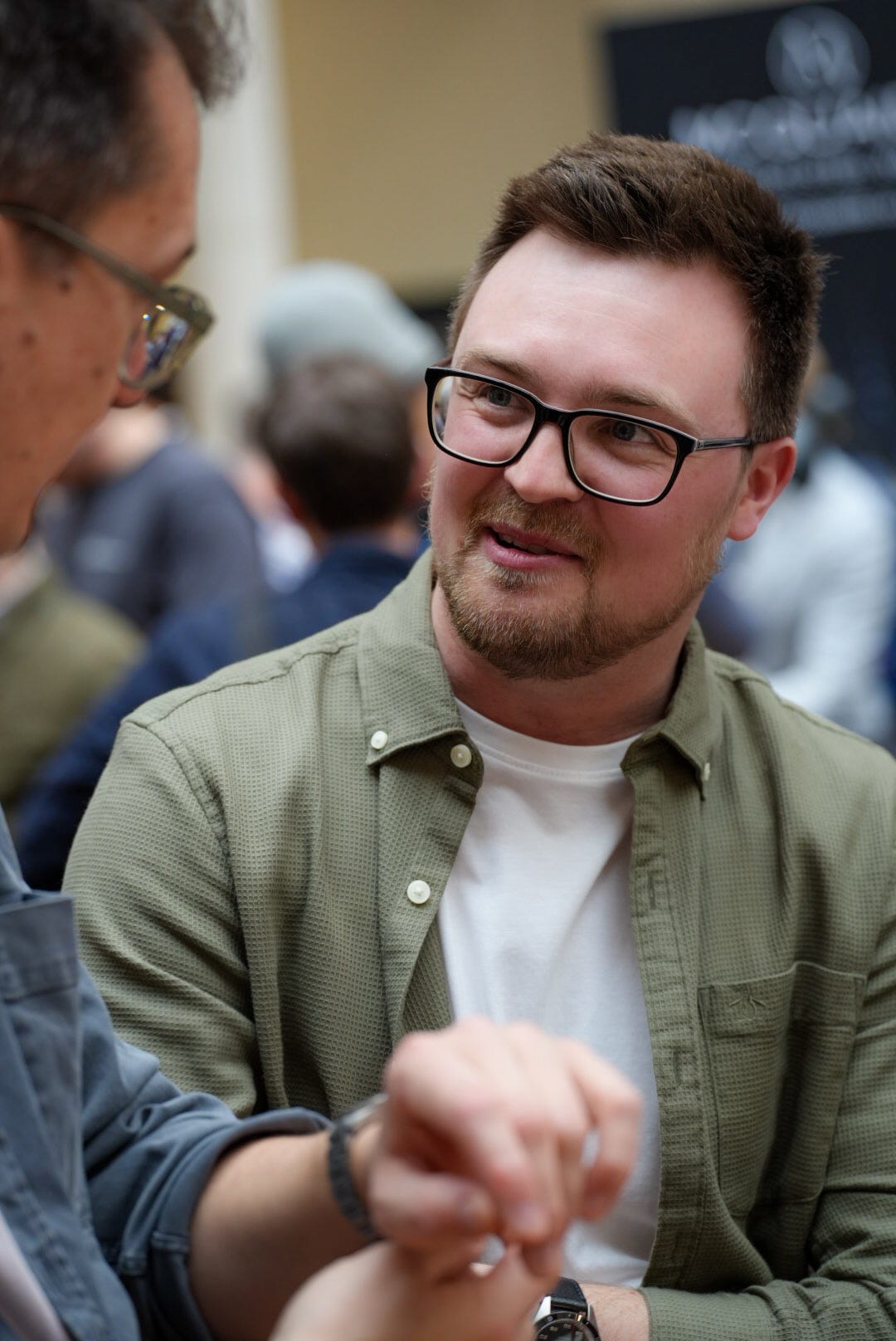
“I suppose I’ve become sort of the face of the business.” It’s a role that surprises even him. “I’m an introverted person most of the time.” Then he smiled. “But when it comes to stuff that I love, I’m extroverted.”
Holly had already hinted that Abinger comes alive when all three founders are together. Tom confirmed it. “We’re at our best at shows.” He described the Abinger choreography of a watch convention.
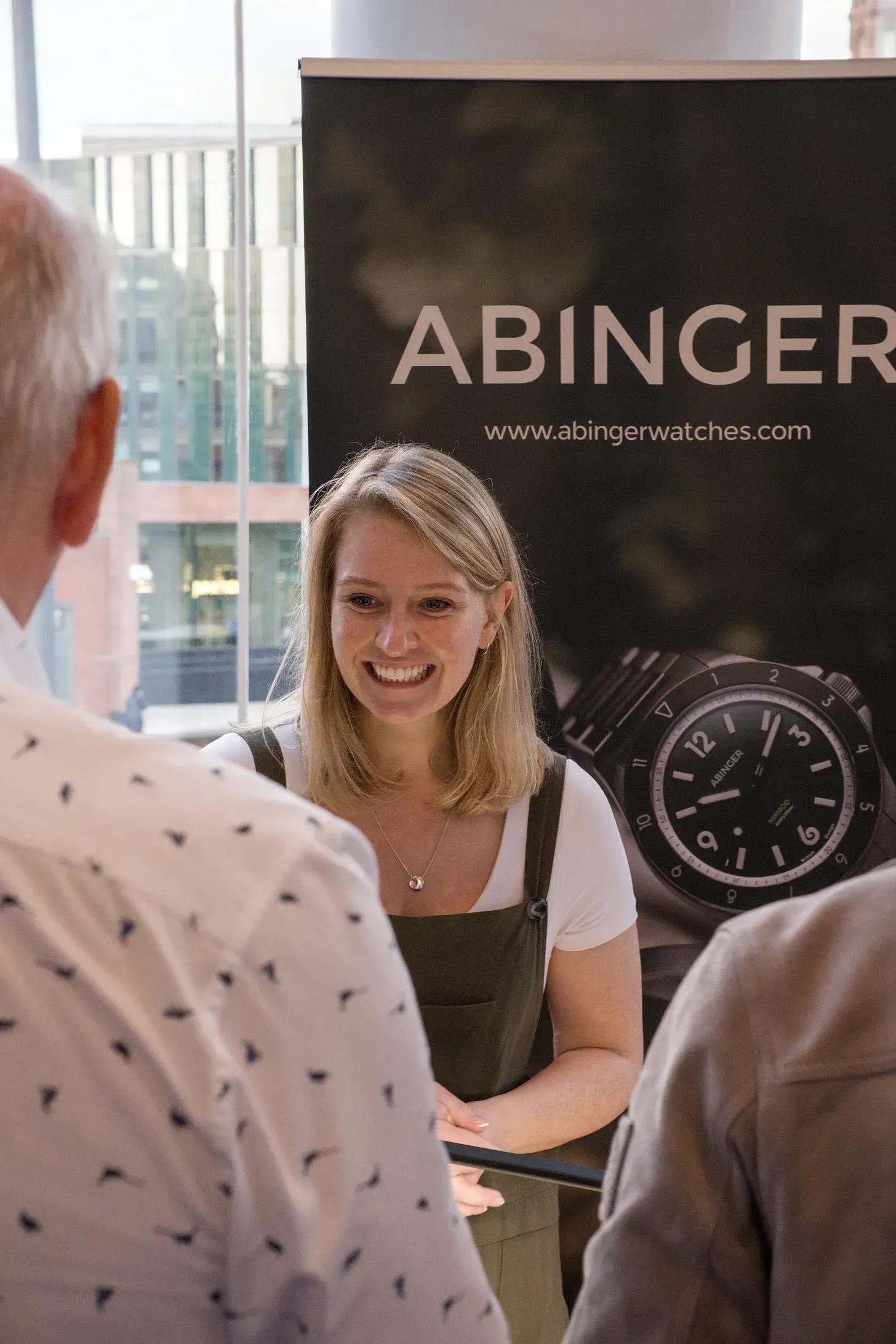
He’s in front of the table talking with visitors. Zoe and Holly work behind it, answering questions, organizing orders, and keeping everything moving. “It just works really nicely.” Apparently, visitors notice. “We’ve had people come up and tell us our stand is a breath of fresh air.”
I’ve long believed that enthusiasts are remarkably good at detecting authenticity. Watch people can forgive imperfections. They can forgive delays. They can even forgive mistakes. What they struggle to forgive is pretense. Nothing about Abinger feels manufactured. Not the family. Not the humor. Not the occasional disagreements. Not even Tom himself.
He speaks with childlike excitement about attending watch shows. “I used to love going to shows.” “Now,” he laughed, “it’s my job. And when I’m done... I could do it all again the next day. Shows never feel like work.”
Originally, Tom wasn’t even sure the brand would be called Abinger. Asking to use his late father-in-law’s surname felt… big. “I didn’t know if Zoe and Holly’s family would let me have [the name].” But he eventually asked, and the answer was much bigger than he expected. It was Holly who later proposed making the business a partnership, with all three founders investing their own money rather than relying on a platform like Kickstarter.
Looking back, Tom admits he surrendered something by doing that. “What I lost was having full control.” Then he immediately corrected himself. “But it actually really works.” Because this was never just his story. “This is something made from their father. And it brings us three together.”
Tom intentionally avoided crowdfunding so Abinger would feel like something built for luxury, and perhaps having a bit of legacy in mind. “I want the name to last longer than I’m around.” A humble ambition compared to, say, wanting the biggest watch company; he wants to create something that outlives him. Not that that’s easy.
When I asked what advice he would give to someone hoping to start their own brand, I expected practical guidance; instead, he answered as if describing his own journey. “With enough confidence and love for something, anything can happen.”
Tom’s greatest creation, in my opinion, has not been one of his watches (although they’re awesome); rather, it’s been how his passion has grown into something his family can share in.
Zoe Howison Hill - The Wizard Behind the Curtain
Every watch has components you’ll never see but are essential to keeping it running.
The hands and dial get all the attention (friggin’ divas). The case and bracelet are the sparkle sparkle, and sure, the case provides protection. But none of the components make a difference if there isn’t someone behind the curtain making short work of it all. Talking to Zoe Howison Hill, I couldn’t help thinking she occupies this position within Abinger.
“I’m not the most charismatic person,” she told me almost immediately. “When we’re all together, I’m usually the one in the background.” She laughed about it. “And I do not mind in the slightest. If people don’t know what I do, I’m fine with that.”
She’s more than okay being “the one making the cogs turn in the background.” It’s an almost perfect description of someone who seems genuinely happier enabling other people than standing in front of them.
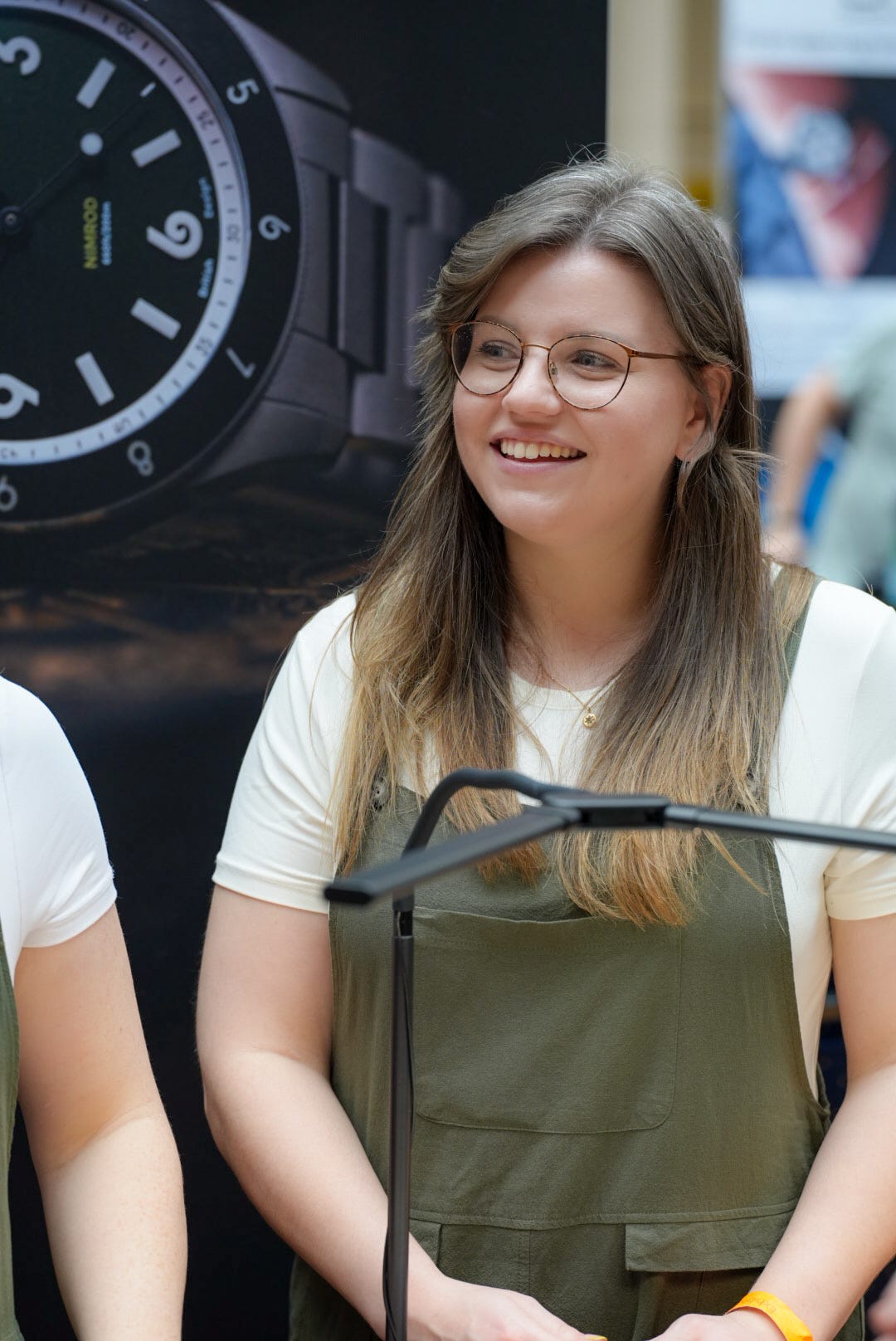
Tom dreams about future watches. Holly thinks about strategy. Zoe worries about today.
“I love a good spreadsheet,” she laughed. “I find that I’m always worried about the ‘now’. I worry about things like cash flow.” It isn’t glamorous work. Neither is processing orders, or making sure invoices are paid.
“If Tom or Holly come up with something to do,” she said with a smile, “I implement it.” It couldn’t be any more simple than that. And this makes Zoe indispensable.
Listening to all three interviews back-to-back, I found something fascinating. Tom credits Holly with transforming Abinger from his project into a shared company. Holly says the decision happened naturally.
Zoe remembers it with the clarity only a sister could have. “It was Holly,” she said. “Completely.” Until then, Abinger had largely existed inside Tom’s imagination. And after a trip that Tom and Zoe took to see manufacturers, Holly saw the seriousness behind it all.
“When Tom and I came back from Hong Kong,” Zoe remembered, “we were like, ‘Okay... we’re going to do this.’” Holly’s reaction? “Wait... this is real?” Soon afterward she proposed becoming a part of the adventure.
Unlike Holly, though, Zoe already shared a bit of her father’s fascination with watches long before Abinger existed. She remembered childhood Saturdays. “Dad would go food shopping, and somehow we’d be gone for hours because we’d also end up watch shopping.” It wasn’t a technical appreciation. There were no discussions of movements and manufacturing. “He didn’t understand the technicalities,” she said. “He just liked watches.”
Sometimes the watch community forgets that it’s perfectly acceptable to simply enjoy watches as is, without getting bogged down in calibers and specs.
Her father also loved Montblanc pens. Naturally, that interest expanded to Montblanc’s watches. Then Zoe revealed something that reframed the company’s origin story. The Montblanc wasn’t purchased solely because her father fancied a bit of bling-bling for himself.
“My dad bought that watch for himself when my grandad passed.” He purchased it while simultaneously buying Zoe a birthday watch. “I didn’t even realize.”
One generation commemorates the loss of another with a watch. Years later, that same watch becomes the catalyst for an entirely new company, also built on the grounds of commemoration.
Although this was never intended, it makes Abinger as a company feel as though it was inherited. So I asked Zoe how working with family functions day-to-day. Initially, she admitted it didn’t work perfectly.
“As a child, I would just do whatever Holly said.” Apparently, this was a long-standing family dynamic. “My mum always said that one day I’d finally tell Holly ‘no’ and Holly would have to learn to deal with it.” Old habits don’t vanish because you’ve registered a company.
“In the beginning,” Zoe admitted, “it was easy to fall back into that default. We’ve gotten much better at being ‘work’ when we need to be and then ‘family’ [at other times].” The relationships existed long before the business and the business had to find its place within them. Not the other way around.
Like Holly, Zoe speaks fondly of the British watch community. There’s no sense that brands are competing to be louder than one another. “Brits don’t like to shout about stuff,” she laughed. “We’re more understated.” She believes that same attitude extends throughout British independent watchmaking.
“If I can help you because I’ve already done this, I’m going to. Maybe it’s just in our nature. We’re all trying to out-humble one another. That’s the real competition.”
Of course, not everything has gone perfectly. I asked what they’d do differently. Without hesitation, Zoe answered: “We’d be more prepared. Marketing. Budgeting. Knowing where to spend money. Learning when to be patient.”
Then she shared another story that perfectly encapsulates the family dynamic. Apparently, meetings require intervention at times. “We do sometimes have to put Tom on a screen ban.” I laughed. Why?
“We’ll be talking for hours,” Zoe said. “I’ll walk over and look at his screen and he’s designed another watch.” She shook her head, smiling. “Yes, but that’s not what you’re supposed to be doing right now.”
It’s charming to think about. One sister worrying about legal compliance. The other worrying about budgets. Meanwhile Tom has designed a watch to be released in a couple of years’ time. I feel as though this is Abinger: delightful, and distilled down to one scene.
When I asked Zoe what Abinger really is, her answer was immediate. “It’s a family brand. A little bit of a British brand and an adventure company. It’s a family brand. Everything else comes afterward.”
Finally, I asked where she hoped all of this would lead. “I think the dream is that we can slowly all begin doing this full time.” Everything up until now has been propelled by patience; why stop now?
Conclusion - Bring on the Phantom
I went into this series of interviews not quite knowing what to expect, since it was certainly an unusual situation I had set up. But I wanted to give readers as honest a peek into the inner workings of Abinger as I could, because I find the way they’ve set themselves up equally unusual.
What I found is that they’re a family in love with their business. And while it may appear a bit messy at times, they’re committed to finding their way through all the uncertainties that new business owners face. The advantage they have is that they have one another, on top of an already open British watchmaking community.
Their second release, the PHANTOM, goes up for pre-order on Saturday, August 1st, at 3pm GMT, with delivery expected in March 2027. The pre-order price will be £699 with free shipping in the UK. You can find more details at Abinger Watches.